
Triagem de Estresse do Dossel
Conteúdo de água do dossel, comparado dentro de um talhão e entre aquisições.
Conteúdo de água foliar, medido contra uma linha de base de matéria seca e comparado entre aquisições.
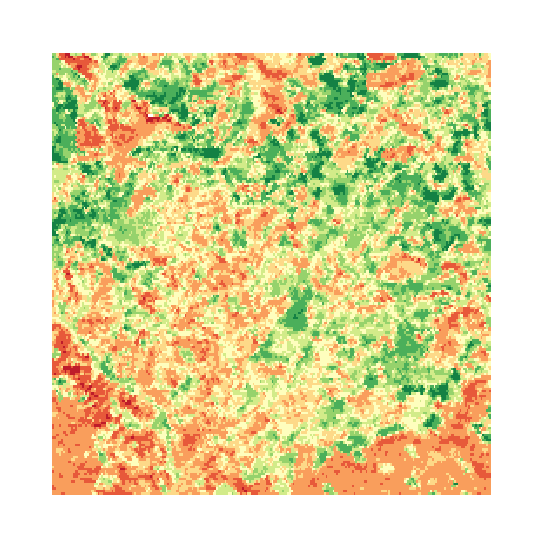
Canopy water content across a conifer stand, read against a dry-matter baseline.
O QUE ELA ENCONTRA
O que ela detecta.
| Material | Contexto típico | O que pode confundi-la |
|---|---|---|
| Foliar Equivalent Water Thickness (EWT) | Commercial timber plantations, watershed forests, and drought-affected stands | Understory grass drying and crown architectural shadowing |
MÉTODO
Como funciona.
Entra reflectância calibrada, e cada pixel é ajustado contra uma biblioteca pública de referência.
Foliar water band depth
Foliar water absorption depth, taken against a dry-matter baseline so that leaf structure does not masquerade as moisture.
Stand-relative comparison
Moisture is compared within a stand and across dates, so every reading is judged against the ground it belongs to.
Structural correction
A canopy scattering model separates water content from canopy structure, so a dense crown does not read as a wet one.
Evaluability masking
Crown gaps where soil or rock dominates the pixel are marked, not averaged in.
ESPECIFICAÇÕES
O que você recebe, e sobre o que ela roda.
Condições de que precisa
Method and checks are documented in Axine Applied Spectroscopy Paper #4 · Section 3.2.
Escopo
Needs continuous canopy cover. It reads crown moisture, compared within a stand rather than in absolute terms.
EXECUTE SOBRE O SEU TERRENO
Execute esta camada sobre a sua própria área.
Solicite processamento sobre a sua área de interesse, ou uma captura programada onde o acervo não tiver nada utilizável. O acesso às imagens de satélite nunca é cobrado: um plano compra os modelos.
ANALÍTICAS COMPLEMENTARES
Camadas relacionadas.
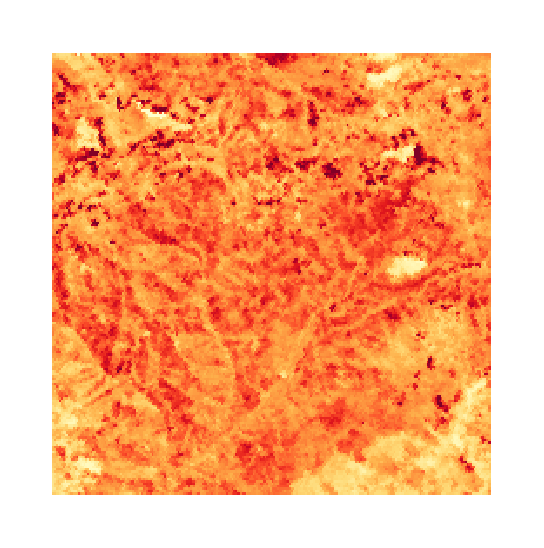
Clorofila do Dossel e Borda Vermelha
Posição da borda vermelha, que acompanha o pigmento do dossel. Recusada em sensores que não conseguem resolvê-la.
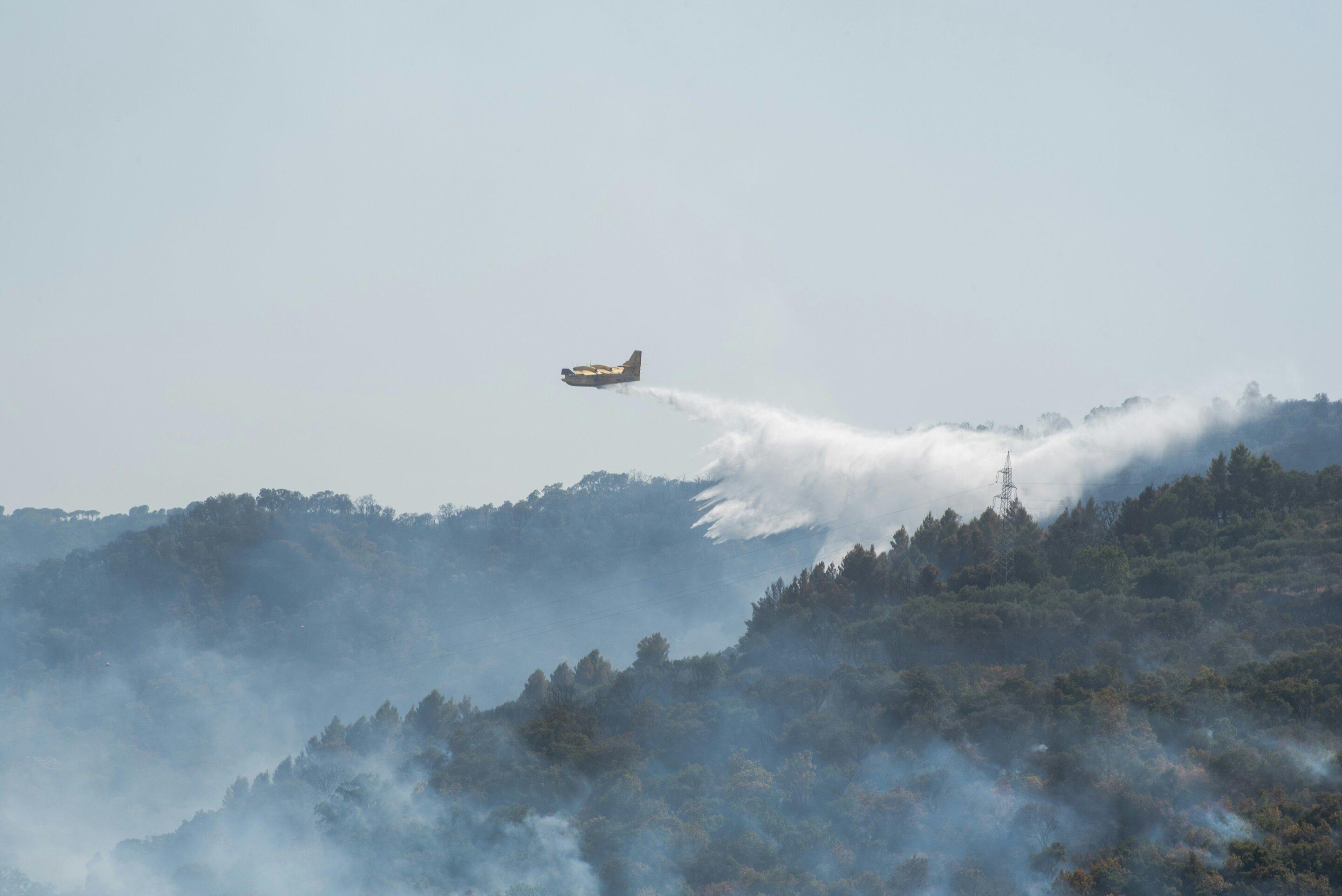
Severidade de Queima e Recuperação Pós-Incêndio
Severidade de queima entre datas pareadas, com carvão e cinza desmisturados para que um pixel parcialmente queimado seja lido como parcialmente queimado.
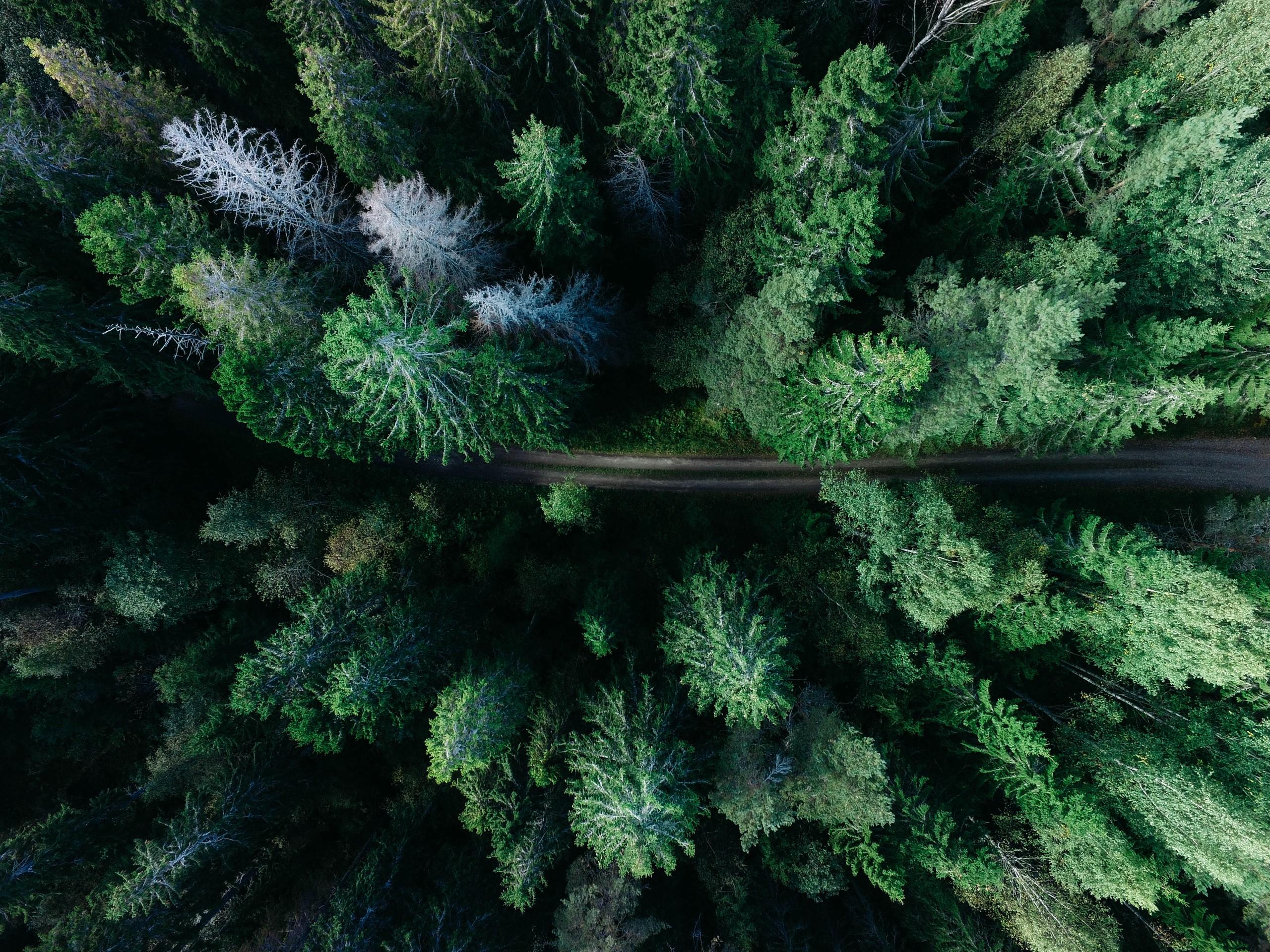
Auditoria de Corte Seletivo
Desmistura subpixel para trilhas de arraste, perturbação de clareiras no dossel e conformidade de colheita sobre uma concessão.