酸性排水筛查
矿山排水渠道沿线的次生铁与硫酸盐包膜,以三价铁类别而非具体矿物名称填图。
排水渠道沿线沉淀包膜的筛查,以三价铁下限设门。
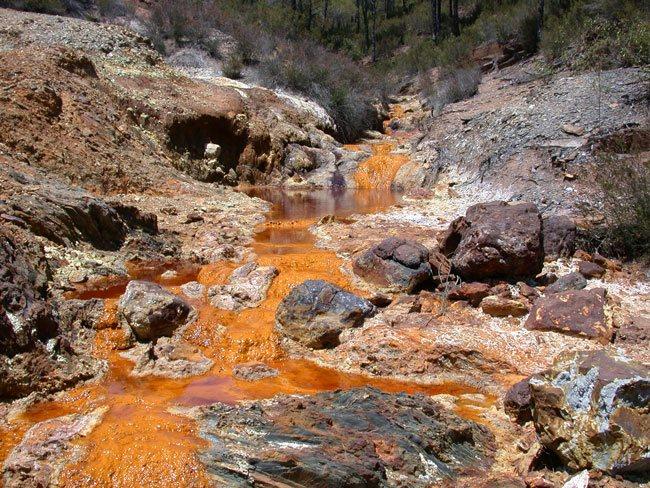
Secondary iron and sulfate coatings along a mining discharge channel, mapped as a lumped ferric class.
传感器看到什么
这个图层在寻找什么。
每种材料的实验室参考光谱,以及传感器波段间隔能捕捉到的部分。阴影区标示方法读取的范围。
它能发现什么
它检测什么。
| 材料 | 典型产出环境 | 可能的混淆因素 |
|---|---|---|
| Ferric hydroxyl class (schwertmannite and copiapite are two candidates) | Acid rock drainage and coal mine seep channels | Copper carbonates, opal, dolomite and brucite all clear the same gate; turbid standing water adds its own sediment signal |
方法
工作原理。
输入校准反射率,每个像元都对照公开参考库进行拟合。
Drainage corridor masking
Active and ephemeral channels are delineated from elevation data and everything off-channel is dropped.
Ferric floor and hydroxyl depth
A pixel must clear a ferric floor before its hydroxyl depth is read at all, which removes white minerals that carry the same OH feature without any iron.
Class reported without a mineral name
The output is a lumped ferric class. No pH is inferred and no individual sulfate is named, because roughly thirty minerals pass this gate and several of them are common at a copper mine.
Reach attribution
Channel segments carry the class, the evaluable pixel fraction and the scene they came from.
技术规格
您得到什么,它在什么数据上运行。
所需环境条件
Method and checks are documented in Axine Applied Spectroscopy Paper #3 · Section 5.1.
适用边界
Reports a ferric class rather than a named mineral or a pH. Dissolved metals in clear water leave nothing to see.