

Harvest Block Record
Available on requestDocument the two questions the Regulation asks of each harvest block: was it forest on 31 December 2020, and is it still forest after the harvest. Each pixel’s forest class is read at the cutoff and in every year since, distinguishing selective harvest from clearance. Every block returns forest retained after harvest, a candidate for review with area and years, or withheld with its reason. Blocks carry directly into the shipment report in the Information System’s wood field order.
Built for purchasing and sustainability leads at importers placing tropical wood first on the EU market.
Core Capabilities
Two-Question Record
Each block is answered for forest at the cutoff and forest after harvest.
Harvest Versus Clearance
Year-by-year forest class separates selective harvest from conversion.
Shipment Ready
Blocks carry onto shipments in the Information System’s wood field order.
What It Looks Like
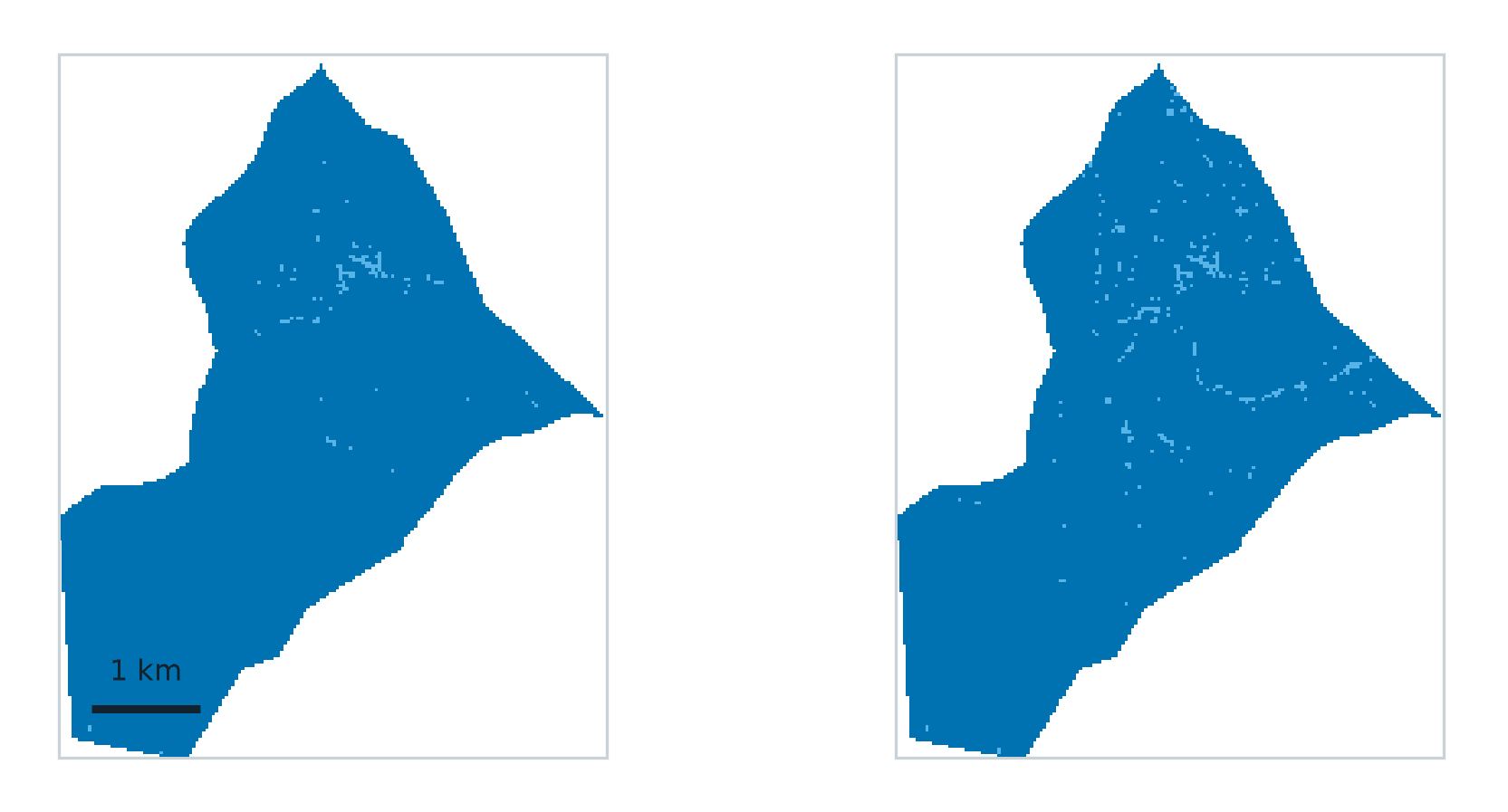
Inputs and Deliverables
Inputs Required
- Harvest blocks, one polygon per block (GeoJSON, zipped shapefile, KML, or KMZ).
- Reference, harvest window, species, country of harvest, and producer for each block.
Deliverables
- One outcome per block: forest retained after harvest, candidate for review with area and years, or withheld with its reason.
- Block record PDF naming every source read.
- Blocks carried onto shipments, with species on the statement.
- Shipment report pages in the Information System’s wood field order.
Methodology and Sources
Public Sources: JRC Tropical Moist Forest, EU 2020 forest maps, Copernicus Sentinel-2.
Commercial Sources: High-resolution imagery via our partner SkyFi (on request).
Limits of Detection
The record addresses forest status at the cutoff and after harvest; it does not assess harvest legality or concession rights. The due diligence obligation stays with the operator.
A selective harvest that leaves the forest standing reads differently from a clearance, because the forest class is tracked year by year from the cutoff forward.
Findings are issued for blocks in Brazil, Cameroon, Indonesia, and Malaysia. Elsewhere, the record is issued as a reading with its sources.
Workflow
Submit Blocks
Upload one polygon per block with reference, harvest window, species, country, and producer.
Forest Reading
The forest class is read at the cutoff and in every year since.
Block Record
Each block returns retained, candidate for review, or withheld, in a PDF with every source named.
Shipment Link
Add blocks to a shipment for the wood field pages of the report.
Use Cases
Wood Importers
Attach a block record to every harvest block a consignment draws on.
Purchasing Leads
Check a supplier’s cutting blocks before purchase.
Sustainability Leads
Keep one sourced record per block for later questions on a consignment.
Measured Results
Each figure is printed with its denominator and scope in the paper it links to.
- 19 of 19
- held-out harvest blocks received a finding of forest retained after harvest
- 0 of 18
- held-out blocks converted to another land use received a finding
Related Solutions
Shipments and Statements
Group the plots behind a consignment and export the statement in the Information System’s field order.
Plot Evidence
Issue a dated finding per plot on what stood on the ground before the cutoff, or withhold it with a stated reason.
Forest Cover Change
Map forest cover at a start date and the loss and gain to an end date, set against the Landsat trajectory.
Submit Ten Flagged Plots
Provide the boundaries of ten plots your screen flagged. The record is delivered within 48 hours as a PDF with the map layers, each plot carrying its finding or its reason and next step.