
Harvest Versus Conversion on a Cameroonian Cutting Block Read From 2020 to 2025
A pixel-level read of a MINFOF annual cutting area harvested in 2021, from the JRC Tropical Moist Forest record and the Commission's 2020 forest maps, at the EUDR cutoff and at the end of 2025.
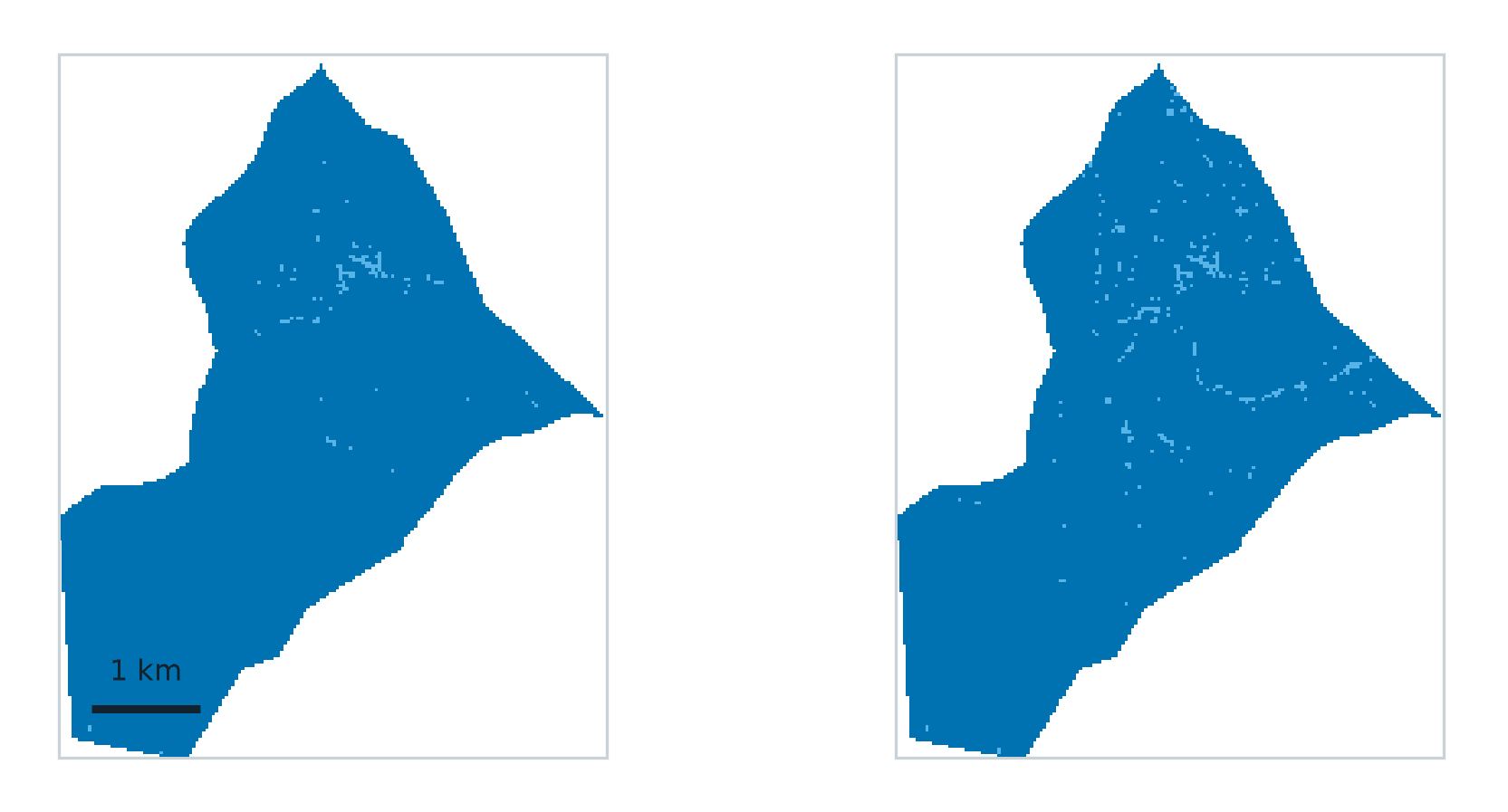

- Location
- MINFOF annual cutting area, Cameroon
- Area
- About 5.0 by 6.5 kilometres, 15,901 pixels
- Record
- End of 2020 and end of 2025, harvested during 2021
- Deliverables
- Block record PDF, outcome per block, shipment report
The problem
A wood importer must show that the harvest behind a shipment left the forest standing, and a tree-cover loss alert fires on a selective harvest and a clearance alike.
What we did
Every pixel's class in the JRC Tropical Moist Forest record read at the cutoff and at the end of 2025, with the Commission's 2020 forest maps and the newest Sentinel-2 looks.
The result
98.1 per cent of the block undisturbed forest four years after harvest, no cleared land, and the outcome forest retained after harvest.
The Objective
Under Regulation (EU) 2025/2650 the due diligence duty for wood sits with the first placer on the EU market. Cameroon is rated standard risk, and ITTO puts Cameroon and Brazil together at more than half of EU27 tropical sawnwood imports in the first half of 2026, so an importer carries dozens of cutting blocks behind a year's purchases. Almost every harvest block was forest at the cutoff; Articles 2(13) and 2(7) ask whether the harvest left the forest standing or turned it into plantation forest or other wooded land. A tree-cover loss alert cannot separate the two, so the importer needs a per-block outcome from a public record, with every source named.
Block Inputs and Archive Reading
The block is an annual cutting area from the Cameroon Ministry of Forests and Wildlife Forest Atlas, inside the moist forest belt, with a harvest window from 1 January to 31 December 2021. It entered the register as a polygon with its reference, harvest window and species, the same fields an importer sends for every block. The harvest block record then read three public archives over it:
- The JRC Tropical Moist Forest record, version v1_2025, built from the full Landsat archive from 1990 to 2025, whose classes separate a disturbance that heals from one that persists.
- The Commission's Global map of forest types 2020 and Global map of forest cover 2020 (version 4), which separate primary, naturally regenerating and planted forest at the cutoff.
- The newest Copernicus Sentinel-2 looks over ground the Landsat record still calls forest, so a clearing made after the record's last mapped year is still read.
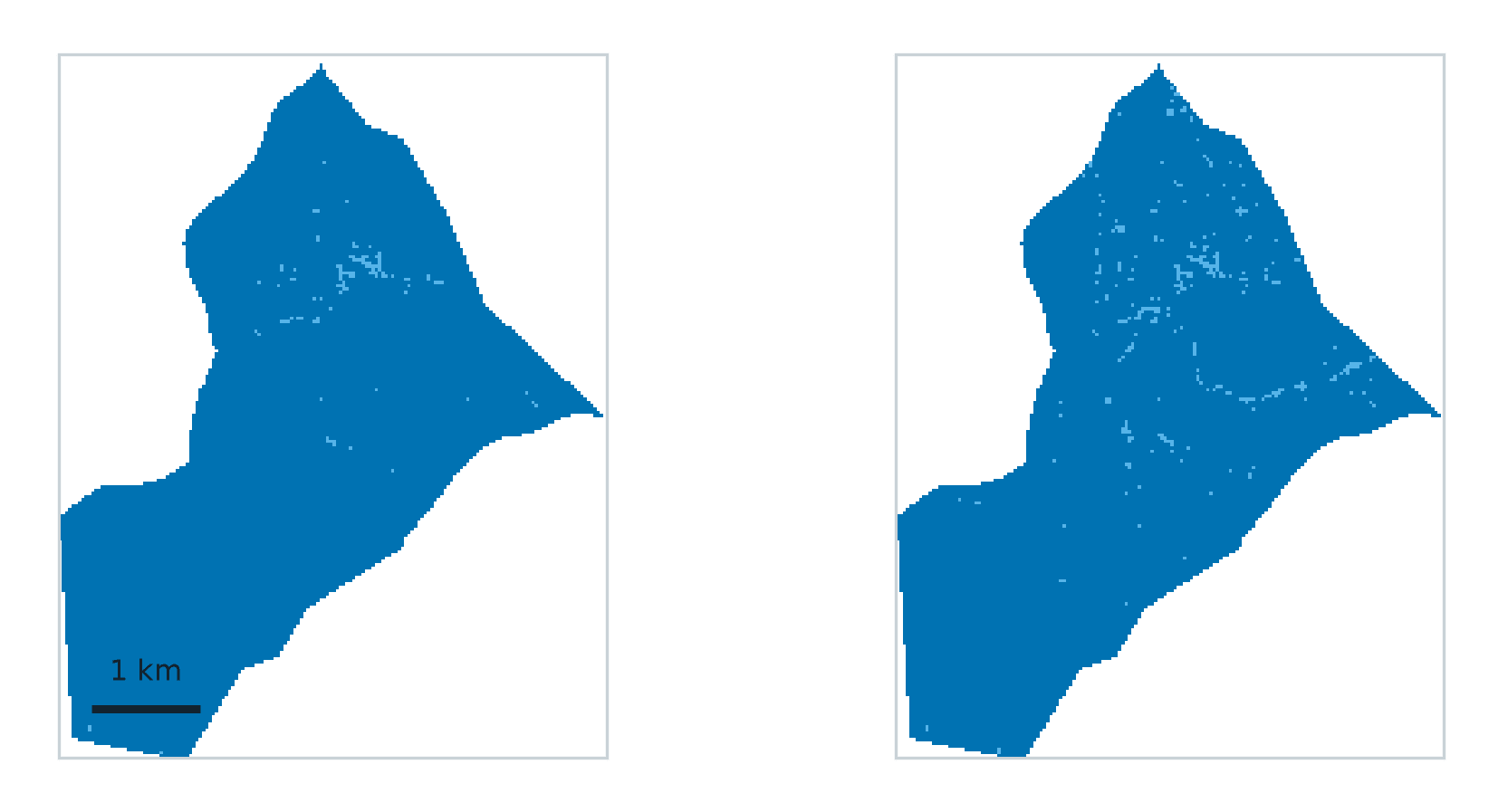
Each of the block's 15,901 pixels was read at the end of 2020, the Regulation's cutoff, and again at the end of 2025, the last year the JRC record has mapped.
Block Findings
The pipeline returned a class for every pixel at both dates.
- Undisturbed forest: 99.3 per cent at the end of 2020, 98.1 per cent at the end of 2025.
- Disturbed canopy, not cleared: 0.7 per cent at the end of 2020, 1.9 per cent at the end of 2025.
- Cleared land, regrowth, water or other land cover: none in either year.
The 1.9 per cent of disturbed canopy runs in thin lines through the block, the pattern roads and skid trails leave. The Commission's FAQ, version 5 of April 2026, confirms that a road or a log landing is not deforestation. The record states the block's outcome as forest retained after harvest.
Outcome Classes and Conversion Detection
Every block receives one of three outcomes:
- Finding: forest at the cutoff and forest retained after the harvest.
- Candidate for review: compact clearing after the cutoff that is not a road or a log landing, with its area and years.
- Withheld: the record does not address this ground, with the reason stated.
A review carries two further flags where they apply: a block whose forest is mostly primary or naturally regenerating and where part of the cleared ground now reads as tree plantation, the Article 2(7) question stated directly; and a block overlapping a licensed industrial pulpwood concession on Indonesia's own concession layer.
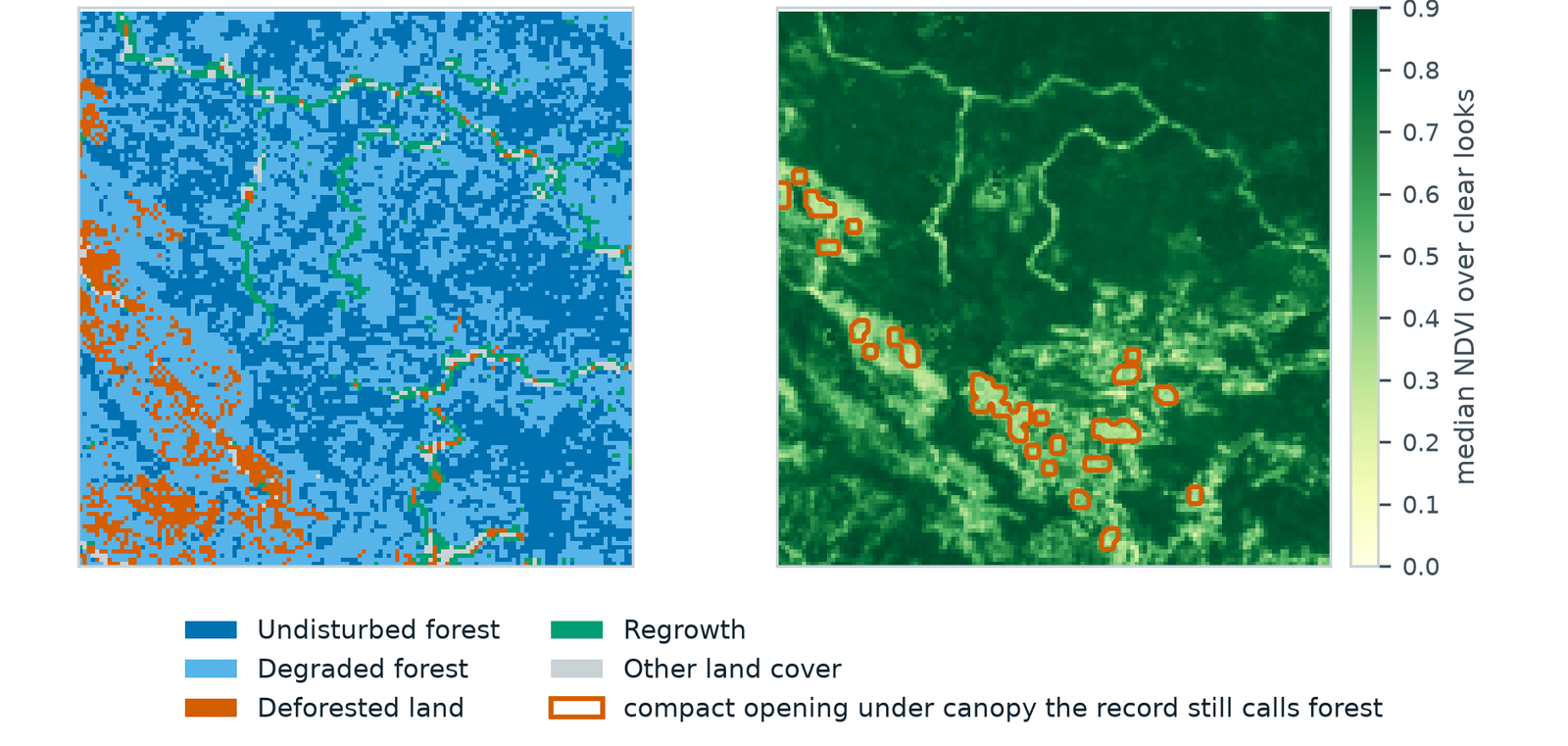
The Sentinel-2 layer extends the read past the Landsat record's last mapped year. On a conversion control inside an oil palm licence in Sarawak, ten Sentinel-2 looks between 24 April and 24 September 2026 located 39 hectares of compact open ground under canopy the Landsat record still called forest, and the block was routed to review.
Control Validation
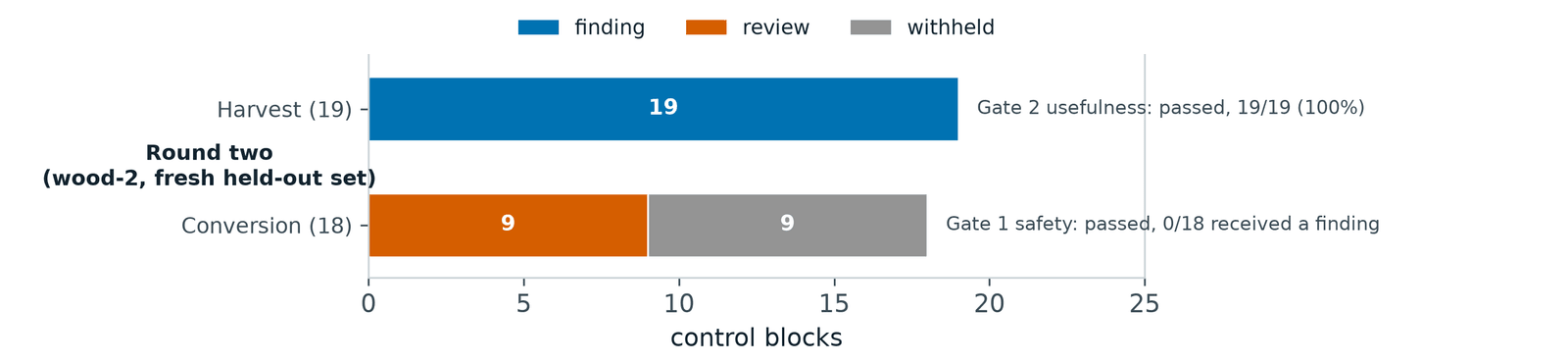
The rule was pre-registered and run against controls in two rounds. Harvest labels came from MINFOF annual cutting areas, Brazilian federal concessions, the Deramakot and Anap Muput forest management units in Sabah, and Indonesian natural-forest logging licences. Conversion labels came from INPE's PRODES clear-cut polygons and from plantation, mining and farm licences checked by a human reader on Sentinel-2 scenes.
- Round two held-out set: 19 of 19 harvest blocks received a finding, including Cameroonian cutting areas assigned to 2023, 2024 and 2025.
- Round two held-out set: 0 of 18 converted blocks received a finding.
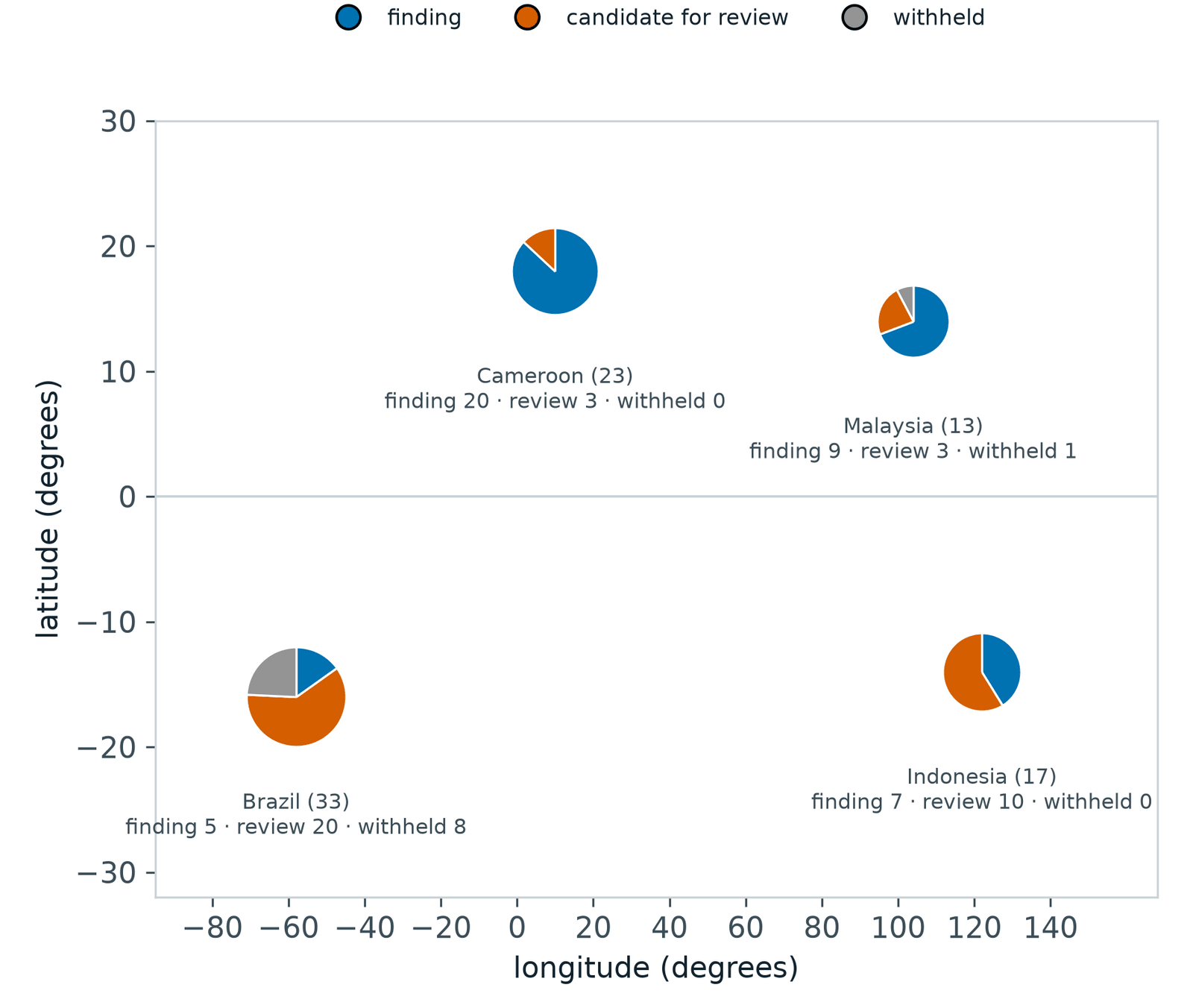
- All controls under the rule now in service: 86 blocks, of which Cameroon carries 23, with 20 findings, 3 candidates for review and none withheld.
Operational Utility
Each block returns its outcome, a block record PDF with every source named, and a row in the shipment report in the Information System's wood field order: species with full scientific and common name as Article 9(1)(a) and Annex II require, country of harvest, geolocation and harvest window. Blocks with a finding go into the file with their sources, blocks for review go to the supplier with area and years attached, and withheld blocks carry a reason and a next step. Findings and reviews are issued in Brazil, Cameroon, Indonesia and Malaysia; the determination under Article 10 stays with the operator who files the shipment.
Run this on your own ground
Draw an area of interest, pick the dates, and the same analysis runs against the archive over your sites.
References
- Axine Labs (2026). Harvest or conversion: a per-block record for wood placed on the EU market. Sections 1 to 4 and 6.
- Vancutsem C., Achard F., Pekel J.-F. et al. (2021). Long-term (1990 to 2019) monitoring of forest cover changes in the humid tropics. Science Advances 7(10), eabe1603. doi.org/10.1126/sciadv.abe1603
- Bourgoin C. et al. (2026). Global map of forest types 2020, version 1, and Global map of forest cover 2020, version 4. European Commission, Joint Research Centre.
- Ministère des Forêts et de la Faune, Cameroon, and World Resources Institute. Forest Atlas of Cameroon. cmr.forest-atlas.org
- Regulation (EU) 2023/1115 of the European Parliament and of the Council, Articles 2, 9 and 10, and Regulation (EU) 2025/2650.
- European Commission. FAQ on Regulation (EU) 2023/1115, version 5, April 2026, questions 4.3 to 4.9.
- ITTO Market Information Service. Tropical timber trade report, January to June 2026.
More case studies
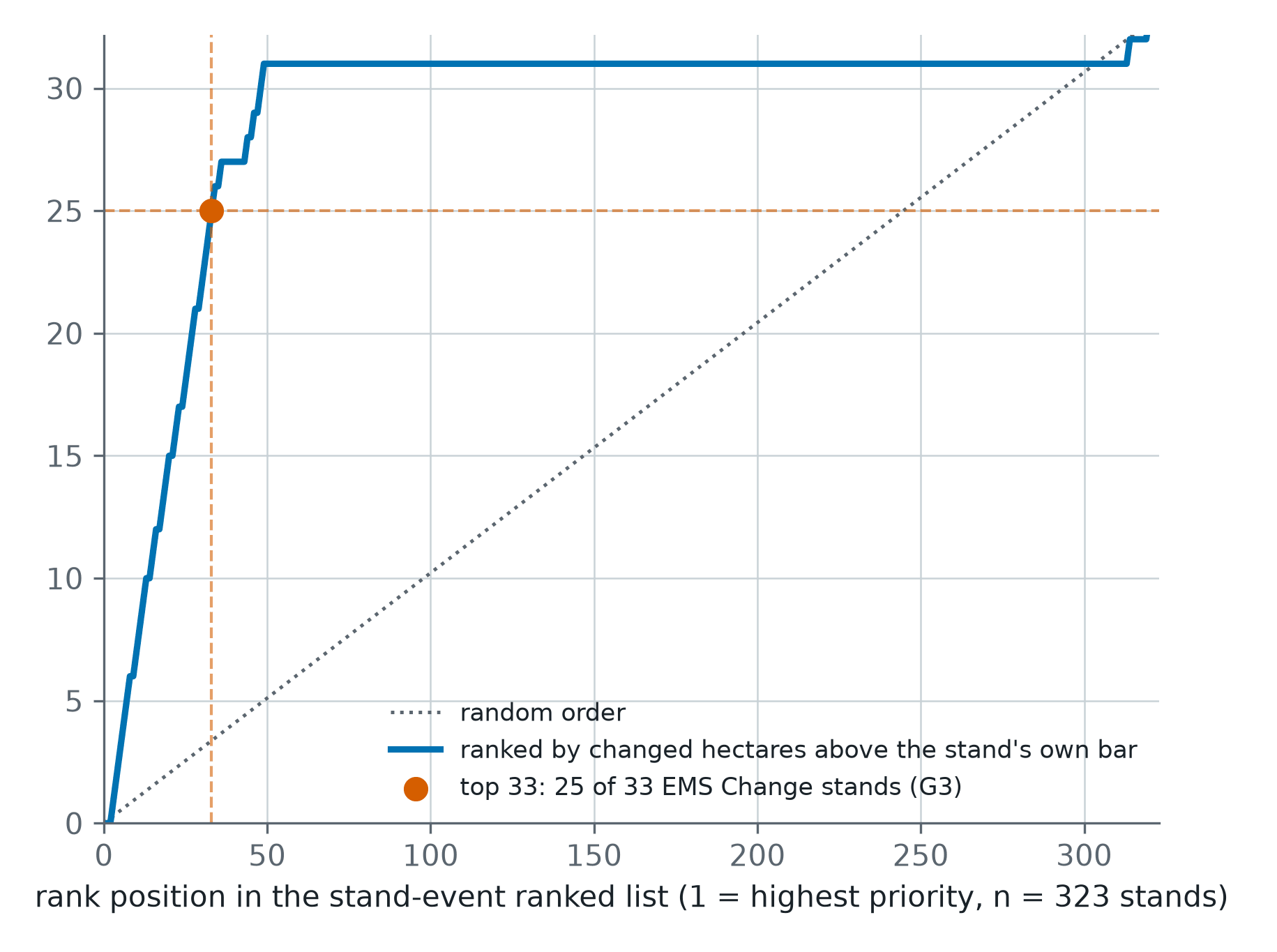
Storm Johannes Stand Ranking From Sentinel-1 and Sentinel-2 Across 323 Swedish Conifer Stands
A post-storm ranking of 323 one-hectare conifer stands in central Sweden, each read from Sentinel-1 and Sentinel-2 against its own quiet years and scored against Copernicus EMS grading.
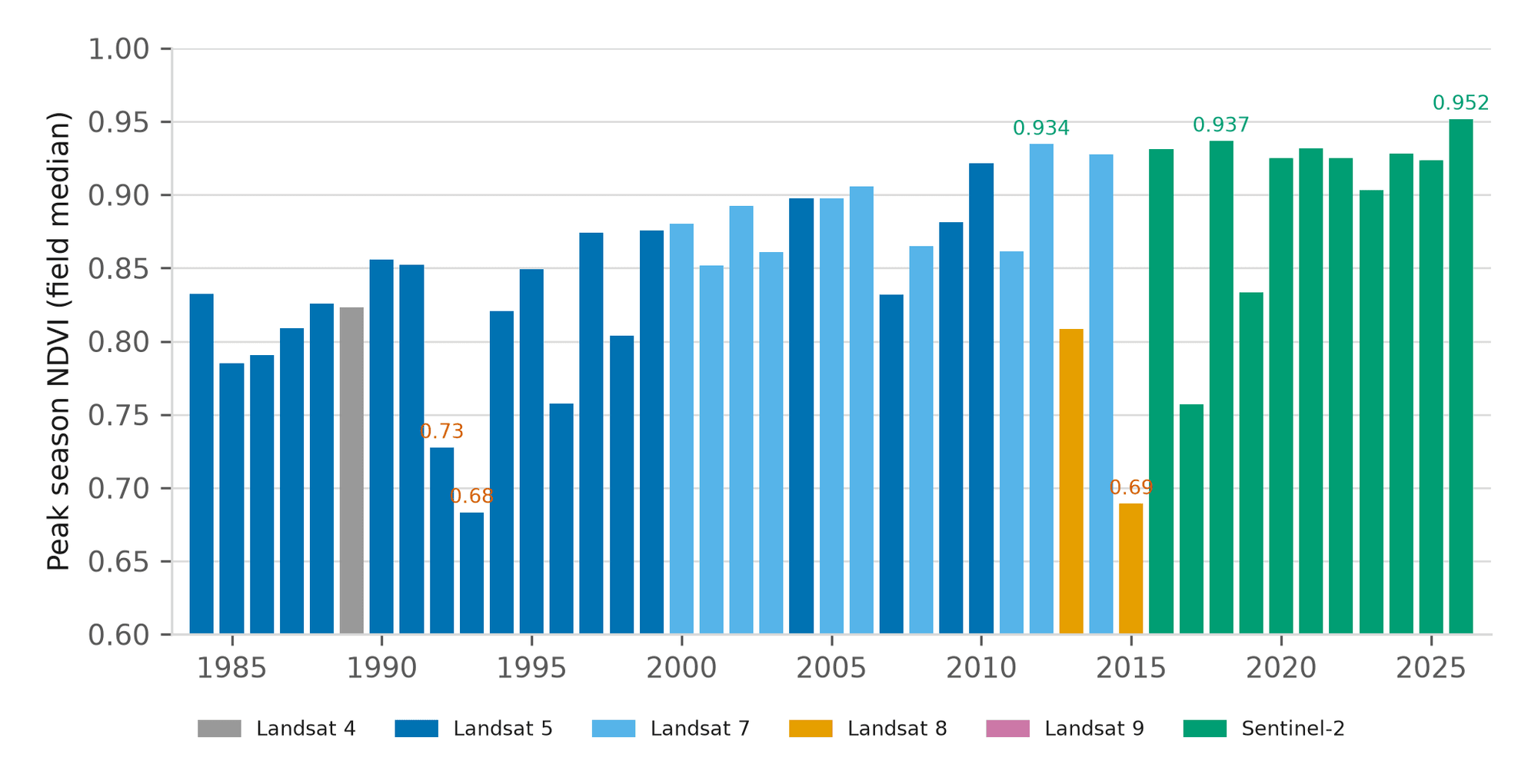
Forty-Three Seasons of a Nebraska Pivot and Management Zone Delineation
A 43-year canopy baseline for one centre pivot near Seward, Nebraska, and a three-tier management zone map built from vegetation, terrain and radar moisture.
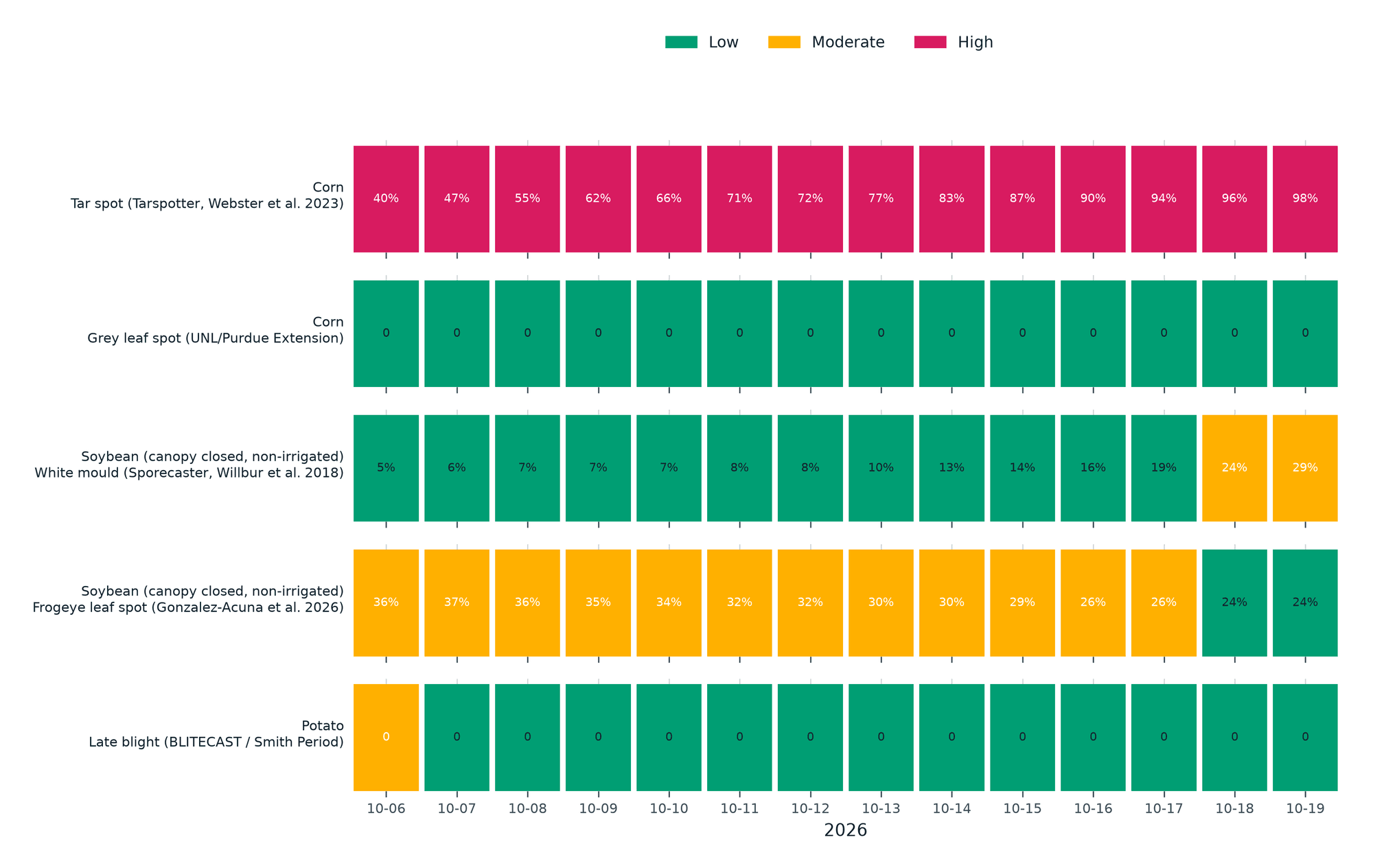
Season Brief and Fourteen-Day Disease Forecast for a Kansas Corn Pivot
A 184-day season brief for a 61-hectare corn pivot in western Kansas against its own 10-year normal, with five published disease models run on the field's own 14-day forecast.